

You know what I see more often than I’d like? A panicked phone call from someone whose dog just got into a bottle of Advil. Or their cat chewed on a lily. And the first thing out of their mouth is always the same: “I didn’t even know that was dangerous.”
Look, I get it. You’re not walking around your house thinking about which of your everyday products could hurt your pet. But March is Poison Prevention Awareness Month, and this is one of those topics where knowing the basics can literally be the difference between a scare and a tragedy.
So let’s talk about the stuff hiding in plain sight.
The Top Toxins in Your Home (They’re Not What You’d Expect)
According to the AVMA, the American Veterinary Medical Association, the biggest pet poisoning culprits aren’t some rare chemical in your garage. They’re things you probably have in your medicine cabinet and kitchen right now.
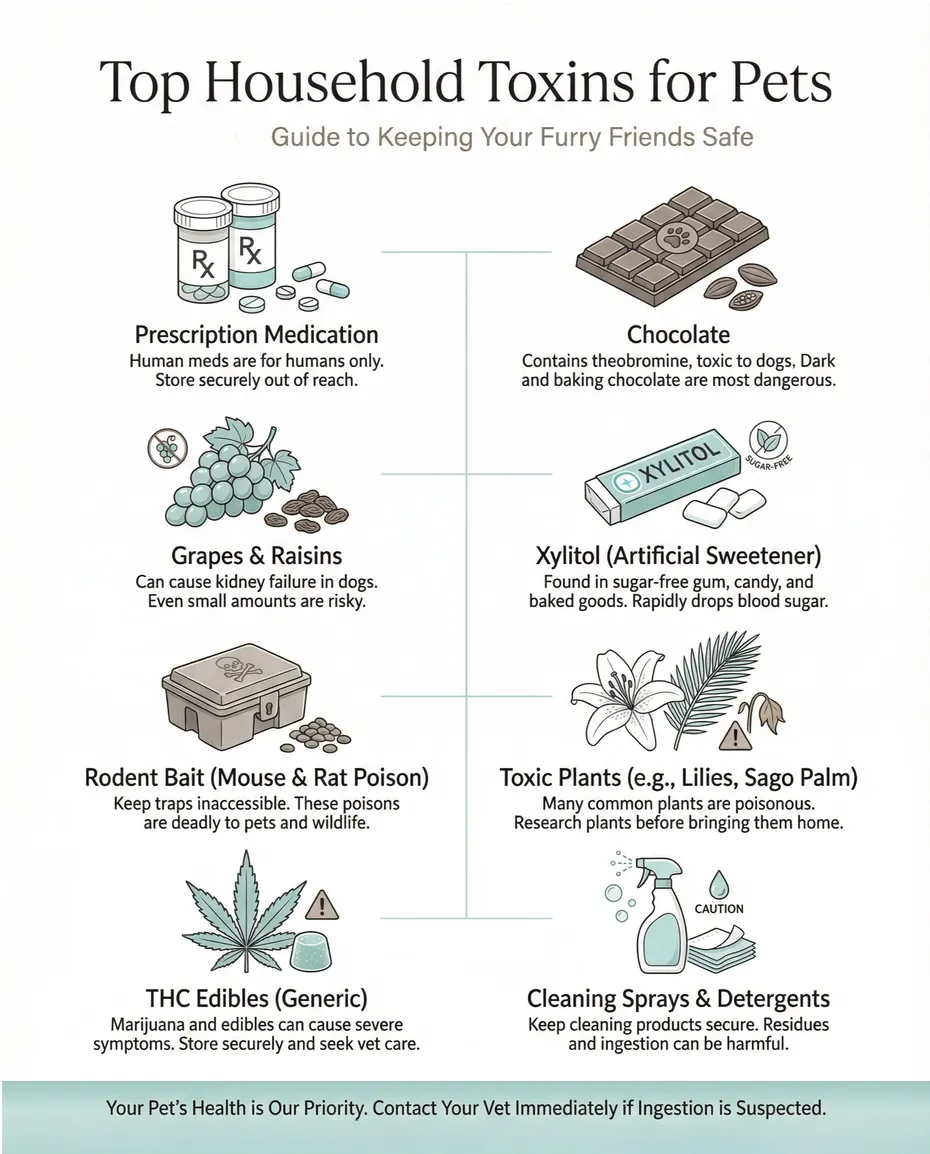
Human Medications – The #1 Threat
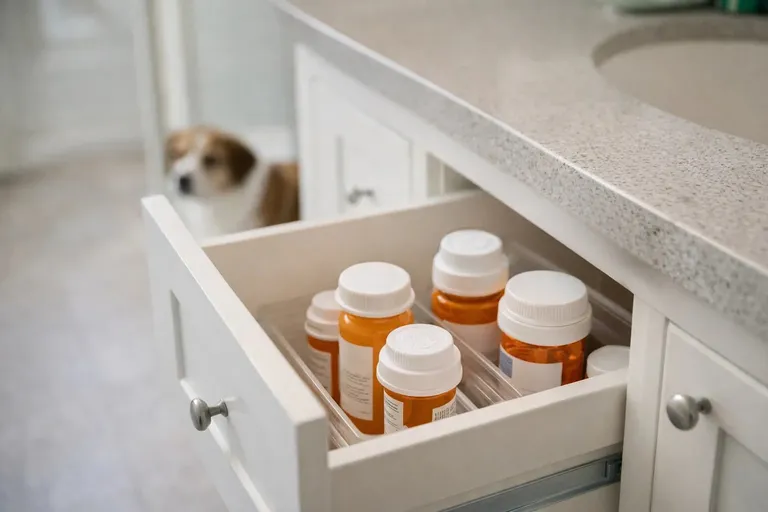
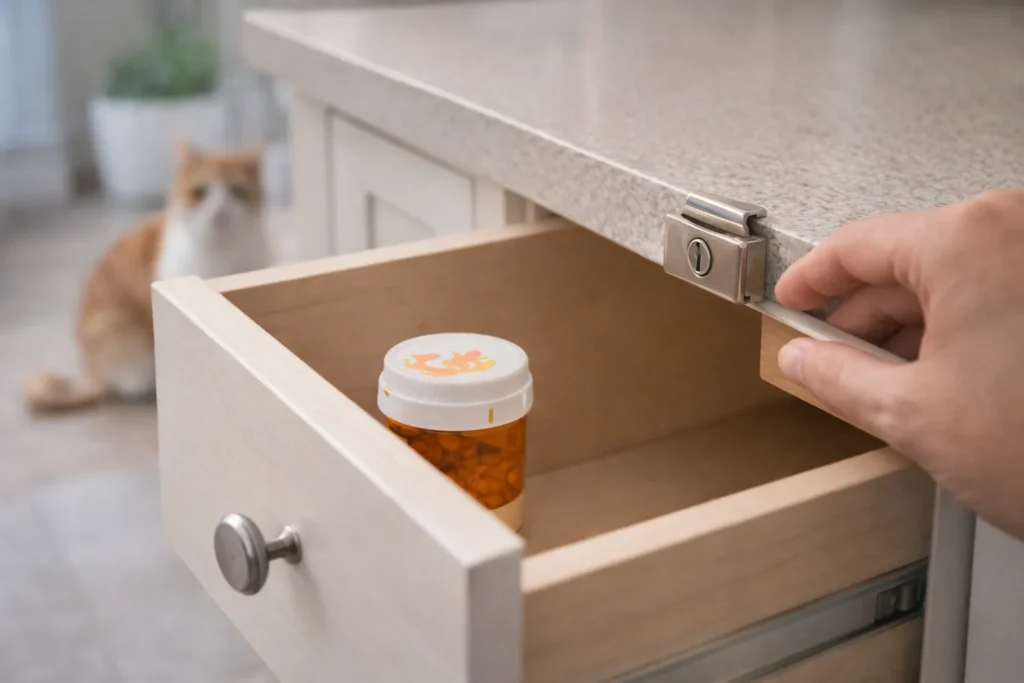
This is the big one. Painkillers like ibuprofen and acetaminophen, antidepressants, ADHD medications, blood pressure pills, they all end up on the poison control call list constantly. Your dog doesn’t care that it’s a childproof cap. A determined Lab can chew through a prescription bottle in about 30 seconds.
And here’s something a lot of people don’t realize: an over-the-counter anti-inflammatory that’s perfectly fine for you is a good way to kill a cat. Cats can’t metabolize these drugs the way we do. Even a single pill can cause kidney failure.
Foods That Are Dangerous for Pets

Most people know about chocolate by now. But there are a few others that fly under the radar:
Xylitol (also labeled as birch sugar) This one scares the most. It’s in sugar-free gum, some peanut butters, toothpaste, certain baked goods. In dogs, xylitol causes a massive insulin spike. We’re talking liver failure, seizures, death, sometimes within hours. Always check the label on peanut butter before you stuff a Kong toy.
Grapes and raisins Still one of those weird ones where we don’t completely understand WHY they’re toxic to dogs, but they are. Some dogs eat a few and are fine. Others develop acute kidney failure. Not worth the gamble.
Chocolate The darker, the more dangerous. A Hershey’s Kiss isn’t going to kill your 80-pound Golden Retriever, but a box of baker’s chocolate? That’s a real problem.
Marijuana and Edibles: Yes, We Need to Talk About It
This is South Florida. I’m going to be honest with you, we’ve been seeing more and more cases of marijuana and THC edible ingestion in pets. And look, nobody’s judging. But dogs don’t process THC the way humans do. They can become severely disoriented, have trouble walking, develop low body temperature, and in some cases it can be life-threatening.
If your pet gets into something, just be honest with your vet. We don’t care what you have in your house. We care about treating your pet. The more we know, the faster we can help.
Rodenticides — The Silent Killer
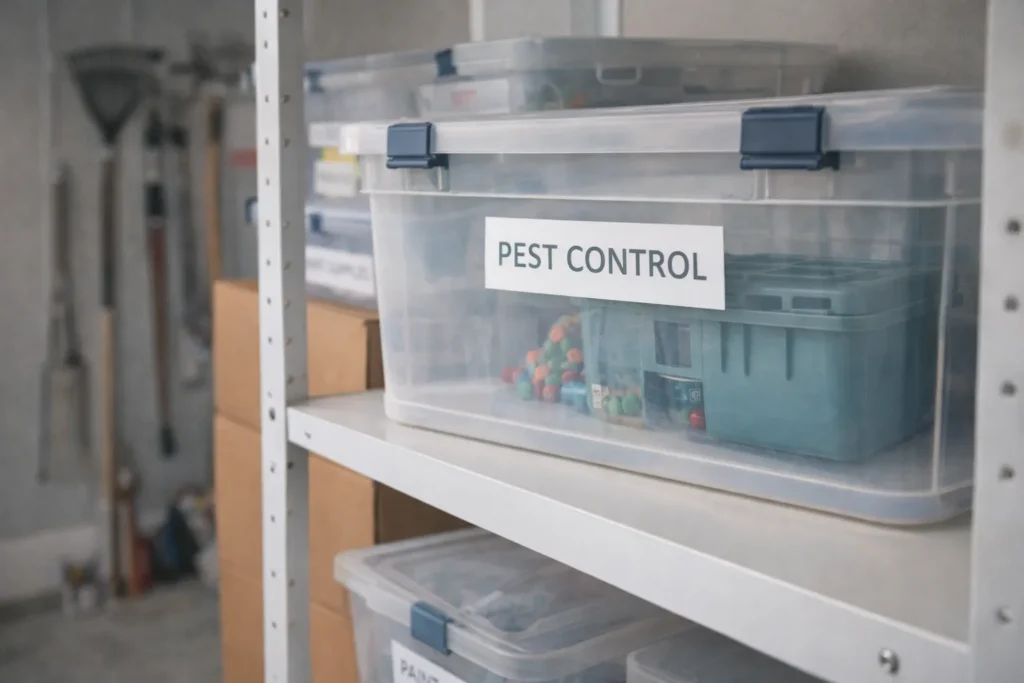
Mouse and rat poison. This stuff is designed to be attractive, it smells good, it’s flavored. So of course your dog is going to want to eat it. Here’s the scary part: some of the newer rodenticides have no antidote and can be fatal. If you use any kind of pest control bait in or around your home, make absolutely sure your pet can’t access it.
Plants That Look Pretty but Can Be Deadly

If you have cats, listen up: lilies can kill your cat. Every part of the plant, flowers, leaves, pollen, even the water in the vase. A cat just brushing against lily pollen and grooming it off their fur can develop fatal kidney failure. Easter is right around the corner, and we see this every year. If someone sends you a bouquet with lilies and you have a cat, get them out of your house.
Tulips, baby’s breath, sago palms, and oleander are also on the danger list. Pretty much anything in your garden or on your countertop, look it up before you assume it’s safe.
How to Tell If Your Pet Got Into Something

Here’s the thing about poisoning, you don’t always catch them in the act. Sometimes you come home and your dog is just… off. So what do you watch for?
The signs can vary depending on what they got into, but the common ones include: vomiting (especially repeated vomiting), excessive drooling, loss of appetite, lethargy, like they’re just lying there and don’t want to move, rapid or labored breathing, seizures, and loose or bloody stools.
Any one of these warrants a call. Multiple symptoms? Get to a vet now.
What to Do If You Think Your Pet Was Poisoned
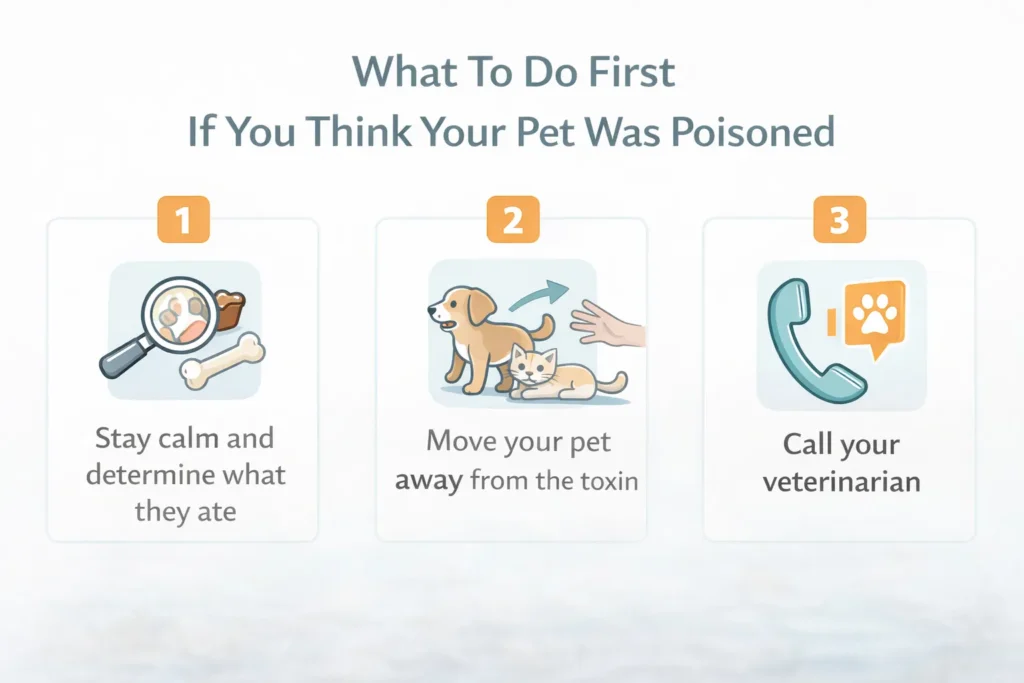
First, don’t panic, but don’t wait either. Time matters.
Try to figure out what they ate and how much. If there’s a box, a wrapper, a chewed-up bottle, grab it. That information is going to help your vet figure out the treatment plan a lot faster.
Call your vet immediately. During our business hours Monday through Friday, 8 AM to 6 PM, call us at (561) 493-3860. We’ll tell you what to do next.
After hours or weekends? Head straight to a 24-hour emergency vet hospital. Don’t wait until morning.
You can also call the ASPCA Animal Poison Control Center anytime, 24/7: 888-426-4435 (a consultation fee may apply, but they are staffed by veterinary toxicologists and they’re excellent).
One more thing, do NOT try to make your pet vomit unless a veterinarian tells you to. Some substances do more damage coming back up.
While We’re at It, Let’s Talk About That Spring Wellness Checkup
You know, one of our longtime clients, Kim, recently said that Dr. Steve “pretty much saved my dog’s life by detecting a heart murmur” during a routine checkup. That’s the whole point. We catch things before they become emergencies.
Spring is the perfect time to get your pet in for a full head-to-tail exam. When is it a bad time? Sure, fair point — but spring specifically is when parasites become more active here in South Florida. Fleas, ticks, mosquitoes carrying heartworm they’re all ramping up as it gets warmer. It’s also a great time to catch any changes in your pet’s health or behavior that may have developed over the winter months.
What We Cover During a Wellness Checkup

A full physical exam we’re checking everything from eyes, ears, and teeth to heart, lungs, joints, and skin. Weight check and body condition assessment. Vaccines if they’re due. Blood work if needed especially important for senior pets or pets on long-term medication. A dental check you’d be surprised how much dental disease we find that owners had no idea about. Parasite prevention review to make sure heartworm and flea/tick prevention are up to date. And honestly, your questions. Whatever concerns you have about your pet behavior changes, eating habits, lumps and bumps, mobility bring them up. That’s what we’re here for.
The best part? We come to you. No stressful car ride, no waiting room full of other animals, no wrestling your cat into a carrier. Dr. Steve shows up at your door, and your pet gets examined in the place where they’re most relaxed, home.
$50 off your Wellness Exam when you mention this post
(Applies if your pet hasn’t been seen in 6 months or more)
March is a good time to take a walk through your house with fresh eyes. Get down on your hands and knees — literally look at things from your pet’s level. What can they reach? What’s on that low shelf? What did you leave on the coffee table? A little bit of awareness goes a long way.
And while you’re at it, get that spring wellness exam on the calendar. It’s one of those things that’s easy to put off until it’s not.
We’re here when you need us.